Showing posts with label Michigan history. Show all posts

Wednesday, August 14, 2013

LES COUREURS DE BOIS ET VOYAGEURS DE STE. CLAIRE SEVENTEENTH ANNUAL ENCAMPMENT, MICHIGAN'S FRENCH CANADIAN HERITAGE DAY, AND JAMES LAFOREST'S STORYKEEPERS PROJECT

The Voyageur's Encampment at Lake St. Clair Metropark 2011
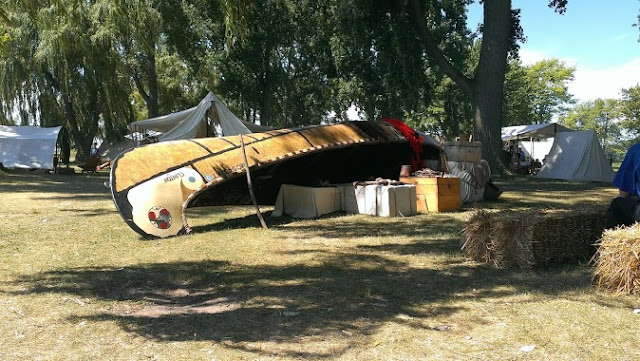
Well ... got myself all geared up for the the Voyageur's Encampment last weekend. Sturdy shoes, sunscreen, hat and camera in hand––I headed over to the Montreal canoe presentation. The presenter was a talented storyteller. He brought the French voyageurs, the fur trade, and history of New France to life. Unfortunately I did not get his name. (Wish the Schedule of Events listed the presenter's names.) 

I was about to take my first photo of his thirty foot Montreal canoe when my camera went dead. I'd forgotten to charge the battery. :( :( :(   But my kind and wonderful husband took some photos with his phone, and along with a few picture's from the 2011 Encampment, I thought I'd update this post. 


Detroit Drunken Historical Society
The Montreal canoe, 30 feet long.


Rabbit, onions and potatoes. 
Jesuit Pears?? 


Launching onto Lake St. Clair


In the Montreal canoe, twelve men could paddle tons of cargo 300 miles in a week.

Just like the 2011 Encampment, it was a beautiful day by Lake St. Clair.


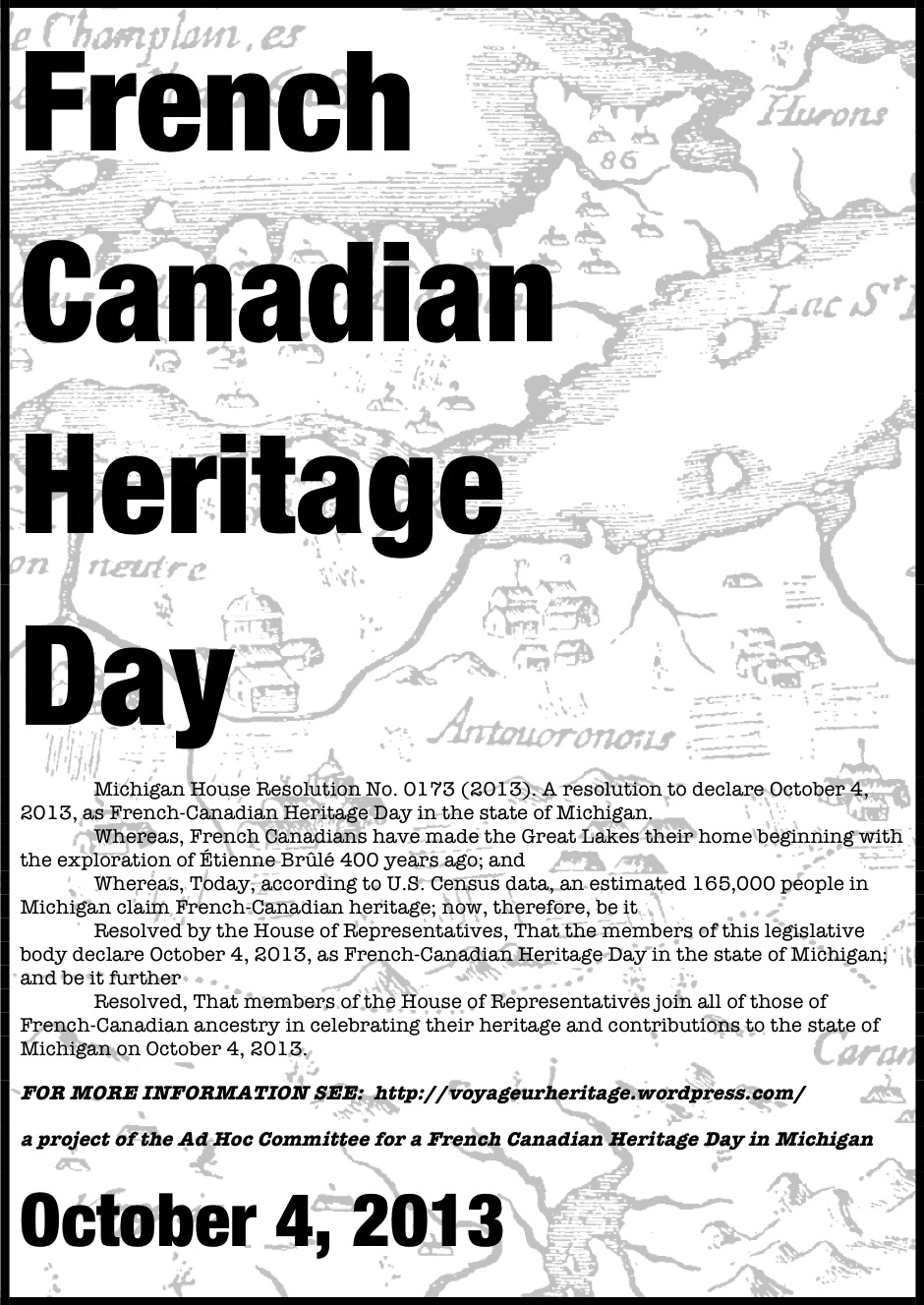
And don't forget Michigan's new French Canadian Heritage day, October 4th, 2013.

Thanks to the efforts of James LaForest, members of the Ad Hoc Committee, and those who signed the petition they sent to Governor Snyder–– October 4, 2013 will be Michigan's first official French Canadian Heritage Day.

James has also started a wonderful project on his blog. He's invited descendants of Michigan's early French to submit memories of their French Canadian families to his Storykeepers Project. Family traditions, childhood memories, food and recipes, genealogy––already there are several great stories posted, so check it out. 

THE STORYKEEPERS PROJECT: YOUR VOICES, FAMILY STORIES

Just thought I'd let everyone know...And thank you James LaForest.

Vivian  : )

Tuesday, July 16, 2013

VACATION AT MACKINAC PART I

The Straits of Mackinac
  
The Straits of Mackinac must be one of the most photographed places in the world. Yet no two photos are ever quite the same. Sunlight, clouds, mist, wind, change the scene from moment to moment, and tomorrow will seem entirely different from today. That's why people return year after year to the same park bench by the Mackinac Bridge.  

  Everybody's favorite bench. Best place in the world to just sit and take in an awesome view.

Had a great vacation at the Straits. Discovered some new places and events. Started with Engineers day at the Soo Locks, toured Michilimackinac again, found the Fr. Marquette Memorial in St. Ignace, and the Forty Mile Point Lighthouse on Lake Huron. 

Took hundreds of photos but don't worry, I'll only post the best ones here at The Last Lord of Paradise, starting with the good old Big Mac Bridge and Colonial Michilimackinac.  


Always changing

Lilacs in July. Mackinac has the perfect climate and soil for growing Lilacs.

One more thing I love about the Mackinac area is its long history. From the Colonial Fort Michilimackinac, set on the archeological digs of the original French fort built 1718––to Fort Mackinac on the Island, built by the British in the late 18th century, it's authentic history.  


Michilimackinac gardens

British soldier

Apothecary Rose, has an interesting history and a delightful old rose scent. 


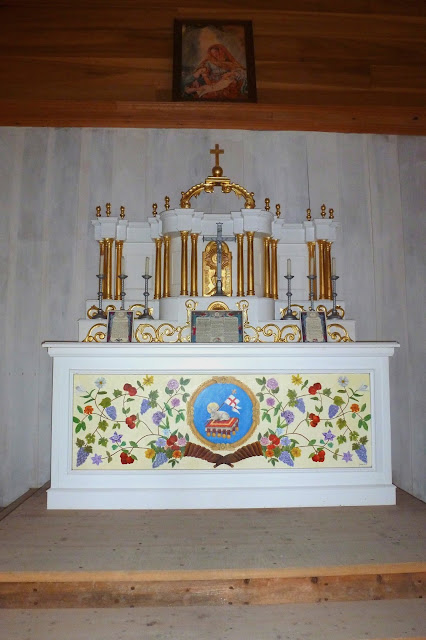
Ste. Anne de Michilimackinac Church


Bake oven

Blacksmith

Open hearth cooking.
Today's treat, cow tongue stew.

Mending her stays. Even young boys wore these. Poor posture and Chiropractors were unheard of in 18th century.


Though I've been there many times, there's always something new to learn at Colonial Michilimackinac.

The Forty Mile Point Lighthouse and New France Discovery Center were pleasant surprises, and the Soo Locks Engineers Day...a Boat Nerd's dream. (Took a great video.) Will post more soon. Thanks for stopping by.

Vivian :)


Friday, August 3, 2012

MY PLACE FOR MICHIGAN HISTORY

The Mackinac Bridge joins Michigans Lower and Upper Peninsula

Everyone has heard of Mackinac Island. Situated between Michigan's upper and lower peninsulas, it's been a tourist haunt for over a hundred years, famed for it's Grand Hotel, horse drawn carriages, jetboat ferries and fudge.

But tucked away under the Mackinac Bridge on the lower peninsula is my favorite place to discover Michigan history––Colonial Michilimackinac. According to the Jesuit Relations, the odd name derives from the Mishinimaki or Mishinimakinagog, an Algonquin tribe that first occupied Mackinac Island.  This fort and fur trading post first built around 1715, was reconstructed according to fifty years of archeological evidence.

From colonial women cooking real meals over an open hearth, to Native Americans sitting outside their lodge, to the redcoat explaining why British soldiers were required to have at least two teeth in their mouth, and the fur trapper explaining why beaver pelts were valuable and where the term "mad hatter" came from––Colonial Michilimackinac's historical interpreters are fun and interesting. It's a great time for all ages.

Here's a video from the  
Colonial Michilimackinac website.

My own photos are below, along with a map. 


Michilimackinac was lost to the British in 1761 after the French and Indian War, but life continued on for those settled there. Even after a surprise attack by the local Ojibwe as part of Pontiac's Rebellion in June 1763, marriages went on during the year the Indians held the fort.
Married at Michilimackinac

The British regained Michilimackinac, but in 1781 they removed all its structures to Mackinac Island and burned the remains of the fort. Today Archeologists at Michilimackinac, dig for bits and pieces of French Michigan history. 


Vivian


Monday, July 23, 2012

THE BLACK ROBES OF NEW FRANCE


Père Marquette and the Indians
Wilhelm Lamprecht (German 1838-1906) 


I once heard the Jesuit order of priests called the Marine Corp of the Catholic Church. In their quest to convert new souls to Christianity the Jesuits were always the first men on the beach, at the forefront of exploration all over the world.

Born in 1491 a year before Columbus discovered the New World, St. Ignatius of Loyola grew up to found the Society of Jesus in 1540. Shortly after, their priests were sent off to India, China and Japan. Jesuits were heavily involved in exploring North and South America and they figured heavily in Detroit and Michigan history. 

The first missionaries to arrive in New France were Recollet priests in 1615. However, their missions ultimately failed and ten years later the Jesuits arrived. They were hearty men of action and their zeal to gather the souls of the indigenous people to God took them into the Great Lakes region and Michigan's upper peninsula. Fr. Jacques Marquette founded a mission at Sault Ste. Marie in 1668 and St. Ignace in 1671. He later traveled by canoe down the Mississippi River with explorer Louis Joliet, almost to the Gulf of Mexico.
http://en.wikipedia.org/wiki/Jacques_Marquette
http://www.chroniclesofamerica.com/french/jesuit_priests_in_new_france.htm


Besides their search for new souls to evangelize, the Jesuits tried to protect indigenous peoples from exploitation by the French traders--Brandy, for furs or prostitution among the native women, drunkenness and gambling destroyed the Jesuit's good works, leaving the local tribes in chaos. The Jesuit's public denunciations of these activities set them into trouble with the powers of commerce in New France, including Detroit's founder Antoine de la Mothe Cadillac.

"The establishment of Detroit (1701) by La Mothe Cadillac, the French commander at Mackinac, drew away the Hurons from the latter post, and (Fr.) Carheil could no longer remain there. He had, moreover, provoked the enmity of Cadillac, and also of the fur-traders, by his opposition to the brandy traffic, so prevalent at all the trading-posts, and so demoralizing to both French and Indians."
http://puffin.creighton.edu/jesuit/relations/relations_50.html

Fr. Carheil was adamant in denouncing bad behavior at the French garrisons and called to abolish them. 

"CLXXVII. (Fr.) Étienne de Carheil, who has been long stationed at Mackinac, writes (August 30, 1702) to Governor Callières a long account and vigorous denunciation of the lawless conduct and licentiousness that Prevail among both the savages and the French in that region.

“the two Infamous sorts of Commerce which have brought the missions to the brink of destruction: . . . the Commerce in brandy, and the Commerce of the savage women with the French. Both are carried on in an equally public manner, without our being able to remedy the evil, because we are not supported by the Commandants. . . . All the villages of our savages are now only Taverns, as regards drunkenness; and sodoms, as regards immorality — from which we must withdraw, and which we must abandon to the just Anger and vengeance of God.”
http://puffin.creighton.edu/jesuit/relations/relations_65.html

The Jesuits must have had successes with the native tribes because in 1728 the Hurons requested a "Black Robe" as they called the Jesuits, be sent to Detroit to minister to them. Fr. Armand De La Richardie, S.J came from Quebec to establish a mission among them. That mission eventually became Assumption Church in Windsor Ontario.
http://www.assumption.rcec.london.on.ca/history.html

In researching The Last Lord of Paradise, I found this seventy three volume set to be especially interesting. However it is now only available through a subscription.
The Jesuit relations and allied documents : travels and explorations of the Jesuit missionaries in New France, 1610-1791 : the original French, Latin, and Italian texts, with English translations and notes / edited by Reuben Gold Thwaites..

This set is also available at http://puffin.creighton.edu/jesuit/relations/ though not all volumes are yet entered.

I know, it's a very long title, but these books contain first hand accounts of the earliest explorations and interactions of Jesuit priests with the indigenous peoples of North America. This collection of reports, letters, journals, reveals their sincere efforts to convert them to Christianity. Sometimes they were successful, often not, but they admit their disappointments and despair, along with their successes. Their deep faith in God and their religious zeal shows on every page.

From Lake Superior to Detroit to Little Traverse Bay, Jesuits are mentioned on fourteen historical markers that dot the state of Michigan.

http://www.michmarkers.com/pages/S0121.htm
The Society of Jesus exists today, a world wide community still in service to Christ and the Pope.
http://www.jesuit.org/

Vivian

Tuesday, July 3, 2012

FOOTPRINTS OF THE FRENCH


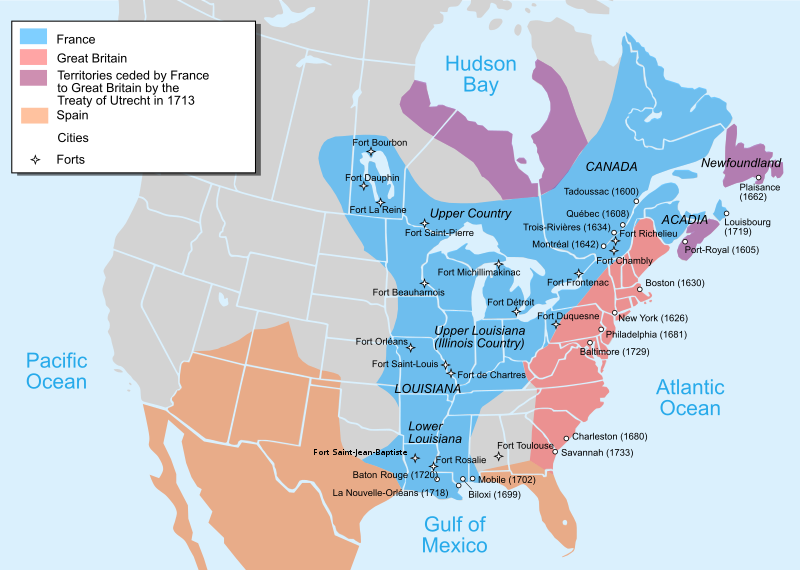
North America 1750

When I was in grade school many many ... many years ago, we studied the French and Indian War (1754-63) when Great Britain and France battled it out over their lands in North America.

The teacher explained how one British surprise attack on Quebec City, launched from the Plains of Abraham, won Great Britain all the French lands claimed in North America.  Then one bored and particularly impudent student quipped, "So what?"

The teacher walked down the row of desks and stopped in front of him. "Well...If the British had not conquered Quebec City that day," she said, pointing a finger at the boy, "You, would be speaking French right now." 

This Fourth of July we will think about the thirteen British colonies from our American history lessons, but French footprints are all over American history too.

Founded by the French in 1701, I thought the City of Detroit was old, but the City of Sault Ste. Marie in Michigan's upper peninsula was founded in 1668. Both were brought to us by the same French who founded Montreal (1642) and Quebec City (1608) in Canada. By 1682 they had  explored and claimed the Mississippi River Valley for France. Then went on to found the City of New Orleans, Louisiana in 1718 and St. Louis, Missouri in 1763.

Stretching from the North Atlantic to the Gulf of Mexico, all of this land was called New France, the French cousin of Britain's thirteen colonies.

Vivian

PS: Please, feel free to leave comments or questions. I'd love to know what you think.

Friday, June 15, 2012

ISLANDS OF THE DETROIT RIVER


 Mikerussell@wikipedia.org 
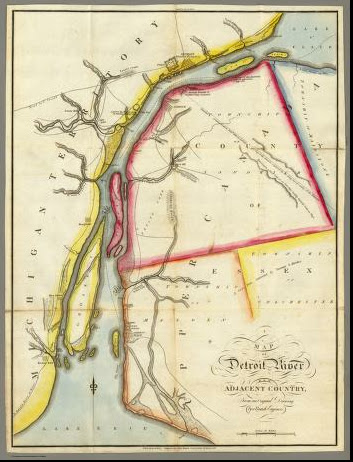
Looking over the map I posted below, I began to understand why I enjoy researching the Detroit River French. I like their modesty, their simple lack of vanity.

Modesty? There's a word we don't hear in these days of narcissistic celebrities and self glorifying social media. But the Detroit River French were a modest people––practical, hardworking, and down to earth as the river they settled. No ego on the banks of the Detroit River, not in 1701.

Detroit's founder, Antoine de la Mothe Cadillac, a minor aristocrat, adopted many different names and titles to further his personal advancement. He had a grand plan for a new fur trading post on the Detroit River, yet he did not name his settlement Cadillac. He called it Fort Pontchartrain after the French Count who helped him gain funding for his mission from the King of France.

No one claimed the glory of discovering the Detroit River by giving it their own name. It was always called Rivière du Détroit, or River of the Strait. And that is exactly what the river is, a narrow, channel of water that connects two larger, bodies of water, Lake St. Clair and Lake Erie.

The French habitants named all their surroundings for just what they were. North of the fort was Presque Isle, (almost an island) and the Grand Marais (big swamp). In the river lay Isle de Cachon. Named Hog Island, because they used pigs to trample the many snakes there, today it is Belle Isle (beautiful island). Farther south on the river was Isle de Dindes (Turkey Island). The largest island was called Grosse Isle (Big Island).

There were few claims of glory among the first habitants of Detroit, at least for themselves. In their eyes only God deserved glory. French mapmakers called the northern lake that fed the river Mer Douce or sweet sea, until the French explorer René Robert Cavelier named it Lac Sainte-Claire in 1679. St. Anne de Detroit Church, the first log building in their settlement, was named after Ste. Anne, whose feast day fell on the date they landed in Detroit.

The hearts and struggles of Detroit's first settlers always belonged to God.


Click the link below to enlarge and explore a great map of the  Detroit River from 1812. Though it was made by a British engineer you can still see many of the old French names, from River Rouge (Red River) to Bois Blanc Isle (White Wood). 

And if you like historic maps check out the David Rumsey Map Collection at: 

David Rumsey Map Collection

There is also an excellent Wikipedia article listing all the islands of the Detroit River. I count twenty eight. How about you?